Hand Embroidered Wall Hangings: How Textile Art Transforms a Room
Walls have a default setting: flat. Paint is flat, posters are flat, even most art is flat behind glass. A hand embroidered wall hanging breaks that rule in the most literal way possible, by putting hundreds of hours of raised, physical thread on the wall, where light can catch it differently at noon and at night. It is the difference between looking at an image and living with an object.
Textile wall art is the part of Studio Afuera closest to our heart, and our wall hangings collection is where the clothing side of the studio and the art side meet. Our wall hangings are embroidered by women across Peru who have practised their craft for many years. Working with them means paying fairly for that knowledge, so these techniques can keep being practised, passed on, and given room to evolve, starting with an upcoming collection of tapestries made with Tejiendo Esperanza.
This guide explains what separates hand embroidery from printed decor, how to choose and hang a piece, and why prices range from a framed textile to the cost of a small painting.
What makes hand embroidery different
A printed canvas is produced in minutes. A hand embroidered piece is built stitch by stitch, and the surface tells you so: thread sits above the cloth, colours are physically woven past each other, and no two pieces land identical even when they share a motif. Embroidery at this scale is closer to drawing with thread than to decoration, and every one of the embroidered pieces we release carries that handwork visibly.
The practical consequence: texture. A room with one textile on the wall immediately feels warmer and quieter, because cloth absorbs sound and light where glass and paint bounce both. Interior designers reach for textiles when a space feels cold, and this is the reason.
The framed Costal series
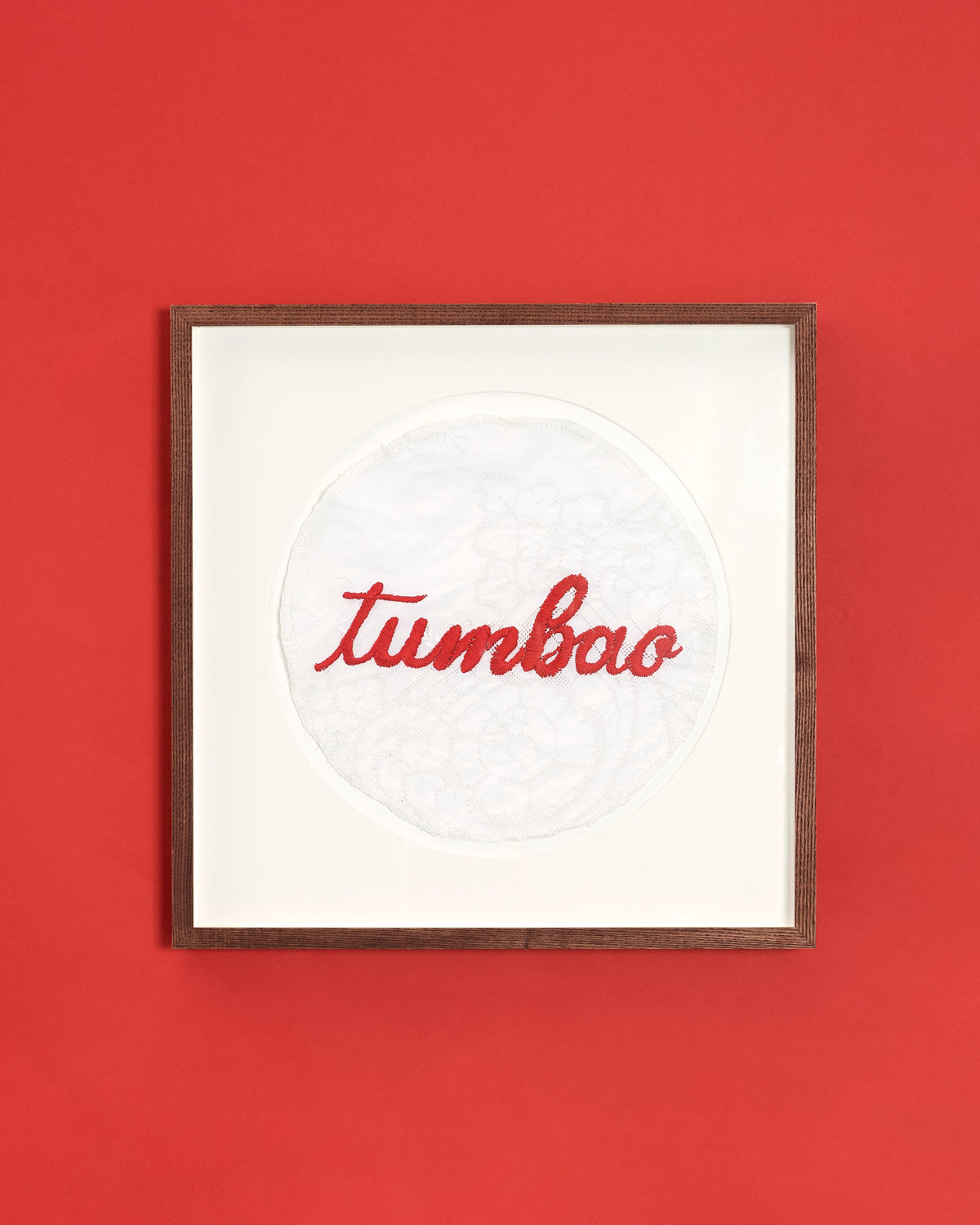
Our Costal series puts bold, single-word embroidery on rough costal cloth, framed, so the piece reads as both artwork and object. Words like mi amor, con sabor, tumbao: short, warm, loaded. The Tumbao framed costal hanging is a good entry into the series, graphic enough to hold a wall alone, small enough to live in a hallway or above a desk.
These pieces work the way neon signs work in a bar, but in cloth and at home: one phrase that sets the temperature of the room. Hang one where guests pause, an entrance, a bar cart corner, the wall behind the dining table.
The statement pieces
At the top of the collection sit the large hand embroidered works, figurative pieces where a whole scene or character is built in thread. The El Mensajero hand embroidered hanging is one of these: a single character, hours of dense stitching, a piece that functions as the anchor of a room rather than an accent in it. These works are made in editions of one or close to it; when a piece finds its wall, that is the end of it.
Several of our most loved pieces have come from working with artists we admire, a thread that runs through the studio and that you can follow on our collabs page. Collaboration is also how the collection stays alive: painters and illustrators think about walls differently from fashion people, and the pieces show it.
How to style textile art at home
Three rules cover most homes. One: give textiles air. A hanging wants empty wall around it, at least a hand-width on every side, more for the large pieces. Two: mix heights and media. A textile beside framed works on paper creates rhythm, and our prints are priced so you can build that mix without drama. Three: think in vignettes. A hanging above a lamp or a ceramic piece from our objects collection turns a wall into a corner, which is how rooms start to feel inhabited.
Avoid direct sunlight, which fades thread over years, and dust the piece with a soft brush now and then. That is the entire maintenance routine; cloth is less fragile than its reputation.
What the prices mean
Our framed Costal pieces sit around £250 to £300, and the large hand embroidered works between £650 and £1,200. The gap is honest: it is hours. A framed single-word piece and a dense figurative hanging are different quantities of handwork, and textile art is one of the few categories where you can see exactly what you paid for by standing close to it.
As a buying rule, in our collection or anywhere: look at the back if you can, count the colour changes, and ask how many exist. Hand embroidery in small editions holds its presence, and its value, in a way open-edition prints never will. For the stories behind individual pieces and the people who make them, our editorial page is the place to wander, starting with the portrait of Maza.Art on the journal.
The short version
A hand embroidered wall hanging does what no print can: it puts texture, time and a human hand on your wall. Start with a framed Costal piece if you want warmth in one word, go to the large embroidered works if a room needs an anchor, give the piece space and shade, and treat the price as what it is, hours of handwork you can stand close to for years.